1. Introduction: Why PC/PMMA Composite Sheet Is Winning the Materials War
For years, smartphone manufacturers chased the premium look and feel of glass back covers, only to face persistent issues: high fragility, elevated weight, manufacturing yield loss, and signal attenuation. Metals offered durability but interfered with wireless charging and 5G millimeter waves. Ceramics delivered aesthetics but came with prohibitive costs and brittle failure.
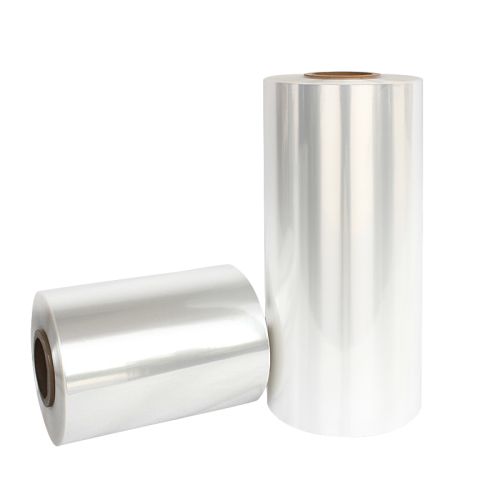
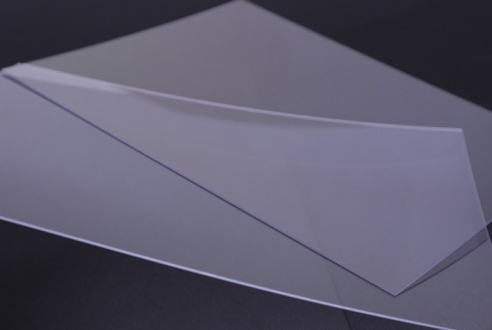
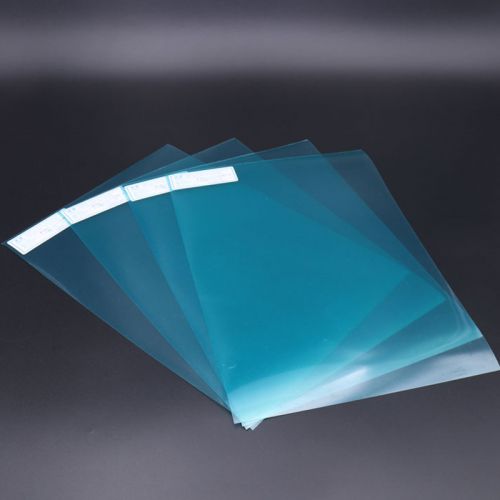
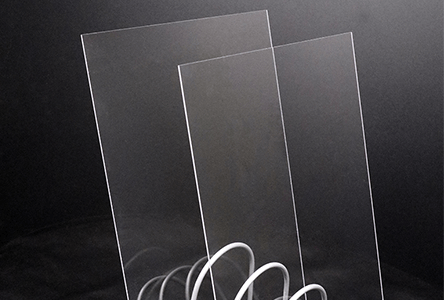
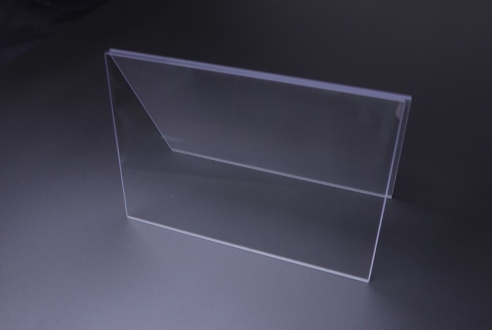
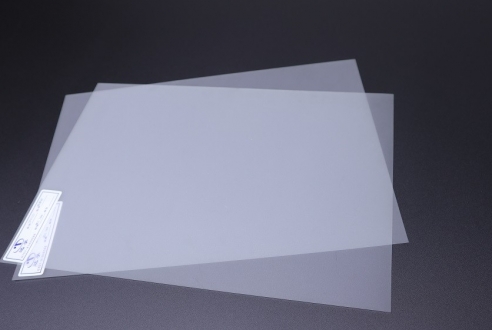
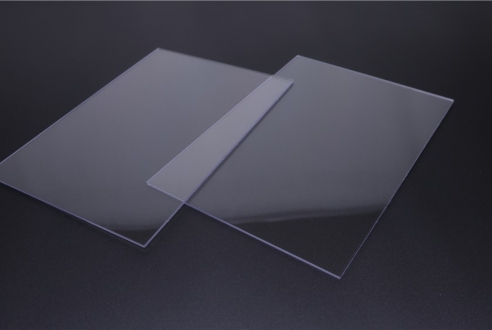
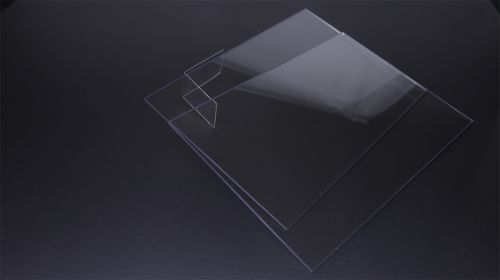
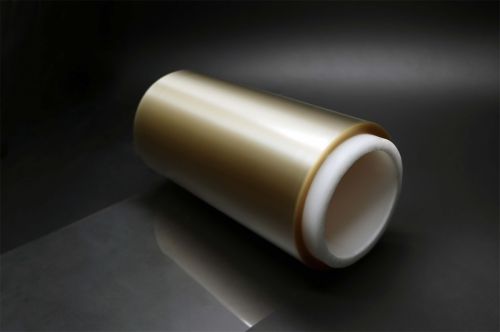
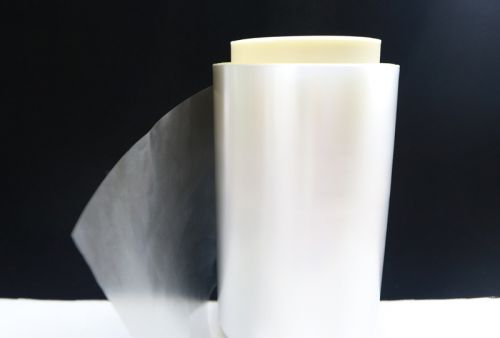
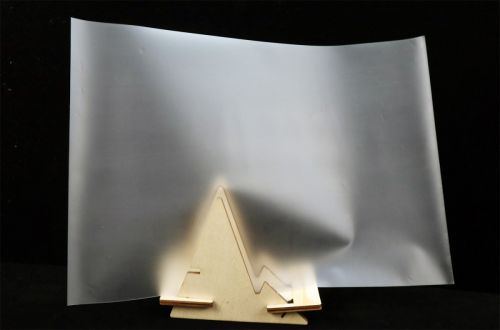
Enter PC/PMMA composite sheet—a co-extruded bilayer or trilayer film that harmonises contradictory requirements. By marrying a PMMA top layer (hard, clear, UV-stable) with a PC bottom layer (tough, flexible, impact-absorbing), this PC+PMMA co-extruded board offers a “best-of-both-worlds” proposition. Its optical clarity (>91% transmittance) rivals glass, its surface hardness (4H–6H after hard coating) matches that of chemically strengthened glass, and its impact resistance exceeds glass by a factor of five in drop tests. Importantly, PC/PMMA composite sheet is inherently radio-frequency transparent, making it the natural choice for 5G antennas and wireless charging coils.
This article goes beyond basic properties to examine how PC/PMMA composite board is processed, where it is being adopted, and why its market growth is outpacing every other cover material.
One of the most compelling differentiators of PC/PMMA composite sheet is its manufacturability. Glass 3D forming requires temperatures above 600°C, expensive molds, and thermal toughening, resulting in yield rates of only 60–70%. In stark contrast, PC/PMMA composite sheet can be 3D high-pressure formed at approximately 180°C with standard hydraulic or pneumatic forming machines. The lower processing temperature reduces energy consumption, shortens cycle times, and dramatically improves production yield (>95% in mature lines).
Furthermore, the material’s excellent stretchability allows deep-drawn geometries—even complex contours with undercuts—without micro-cracking. After forming, the sheet can undergo:
- UV transfer printing for nano-texture patterns (e.g., holographic or anti-glare finishes)
- Screen printing or electroplating for metallic gradients and vibrant colors
- Hard coating (silica-based UV-curable layers) to boost pencil hardness to 6H
- Anti-fingerprint and anti-smudge coatings for enhanced user experience
This combination of low-temperature forming and post-decoration makes PC/PMMA composite board far more versatile and cost-effective than glass, which requires painting or film attachment after forming, adding extra steps and defect risks.
3. Smartphone Back Covers: The Killer Application
The smartphone back cover market is the primary growth engine for PC/PMMA composite sheet. According to industry analysts, the penetration rate of PC/PMMA composite board in mid-to-high-end phones will exceed 45% by 2028, up from less than 20% in 2022. Several factors fuel this adoption:
- Cost reduction: A PC+PMMA composite back cover costs 30–50% less than a 3D glass cover of equivalent visual quality, while being 40% lighter.
- Drop performance: PC/PMMA composite sheet passes 1.5-meter drop tests on concrete without shattering—a feat glass cannot guarantee.
- Wireless charging compatibility: With no metallic interference, PC/PMMA composite board allows faster charging and better coil alignment.
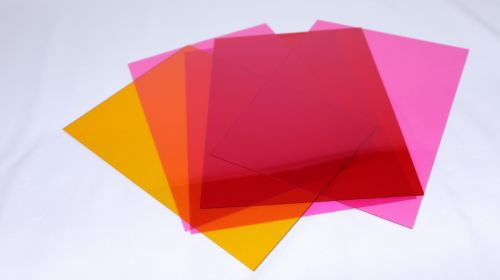
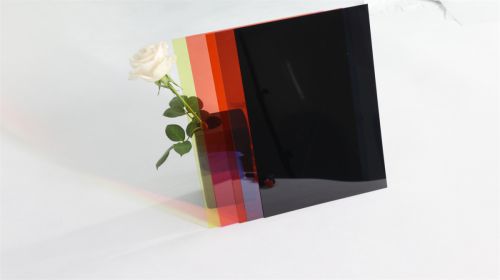
- Design freedom: Brands leverage the material to produce gradient colors, AG (anti-glare) textures, leather-like finishes, and even transparent variants that showcase internal components.
Leading OEMs have already commercialised this technology. For instance, OPPO’s Reno series and vivo’s Y-series utilise PC/PMMA composite sheet for their eye-catching, durable back covers. Transsion, Africa’s largest phone brand, has adopted PC+PMMA co-extruded film across multiple models due to its balance of cost and durability in harsh environments.
4. Automotive Displays and Interior Decorative Panels
Beyond handsets, the automotive sector is embracing PC/PMMA composite sheet for instrument clusters, central infotainment screens, and decorative trim. Modern vehicles require display covers that remain clear under extreme temperatures (-40°C to 85°C), resist UV yellowing, and endure constant touch. Three-layer PC/PMMA composite sheet, ranging from 0.5mm to 2.0mm thickness, delivers the needed rigidity and thermal stability.
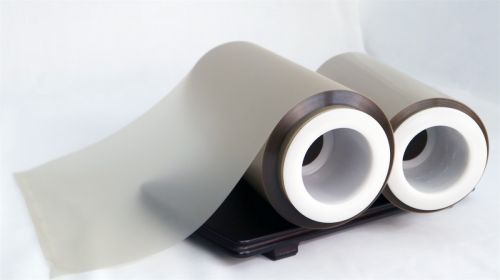
In automotive interiors, PC+PMMA composite board is also used as a carrier film for IMD (In-Mold Decoration) and FIM (Film Insert Molding) processes. The film is printed with wood-grain, carbon-fiber, or brushed-metal patterns, then thermoformed and back-injected with plastic to create one-piece trim parts. The surface hardness of the PMMA layer ensures long-lasting scratch resistance, while the PC layer provides the flexural strength needed for assembly clips and mounting points. Applications include:
- Centre console control panels
- Door handle bezels
- Head-up display (HUD) covers
- Steering wheel decorative inserts
5. Technical Parameters That Define Quality
For engineers and procurement specialists, the following performance benchmarks are critical when selecting PC/PMMA composite sheet:
| Property | Typical Value | Test Method |
|---|
| Thickness range | 0.05 mm – 2.0 mm | Micrometer |
| Light transmittance | >91% | ASTM D1003 |
| Haze | <0.5% | ASTM D1003 |
| Pencil hardness (after hard coat) | 4H – 6H (1000g) | ASTM D3363 |
| Abrasion resistance | #0000 steel wool, 1kg, 5000 cycles no haze | Internal |
| Impact strength (Izod) | 650 J/m (PC layer) | ASTM D256 |
| Forming temperature | 160°C – 190°C | DSC |
| Heat deflection temperature | 95°C (PC) | ASTM D648 |
| UV stability | ΔE < 2 after 500h QUV | SAE J2527 |
These specifications ensure that PC/PMMA composite sheet meets the rigorous reliability standards of both consumer electronics and automotive Tier-1 suppliers.
6. Market Trends and Projections
The PC/PMMA composite sheet market is on a steep upward trajectory. A recent report by Research and Markets values the global market at approximately $420 million in 2024 and forecasts a CAGR of 25.1% to reach $1.29 billion by 2032. Another independent analysis predicts a more bullish scenario of $2.3 billion by 2032, driven by:
- Expansion of 5G networks (over 1.2 billion 5G connections expected by 2026)
- Proliferation of wireless charging (over 60% of new phones will support it by 2027)
- Rising demand for lightweight materials in electric vehicles
- Continuous innovation in textures and colours (e.g., rainbow holographic, magnetic-ink effects)
Geographically, China dominates production, accounting for over 70% of global PC/PMMA composite sheet capacity, with key players like Selen Scientific, Kingfa, and Shandong Rike. However, South Korean and Japanese film manufacturers are also ramping up capacity to meet local EV and smartphone demands.
7. Environmental and Sustainability Considerations
Although PC/PMMA composite sheet is not biodegradable, its lightweight nature reduces transportation emissions, and its durability extends product lifespan, thereby lowering e-waste generation. Many producers now offer recycled-content PC layers or use solvent-free hard coatings to minimise environmental impact. Moreover, the lower energy consumption in forming (vs. glass) contributes to a smaller carbon footprint per part. As circular economy initiatives gain traction, closed-loop recycling of PC/PMMA composite sheet is being piloted, promising a more sustainable future for this versatile material.
Looking ahead, researchers are developing hybrid grades with integrated EMI shielding, self-healing surface layers, and even bio-based PMMA to further enhance functionality. The integration of decorative film with in-mold electronics (IME) is another frontier—PC/PMMA composite sheet could serve as both a decorative cover and a touch-sensor substrate, eliminating separate components and simplifying assembly.
In automotive, the shift toward pillar-to-pillar displays and foldable screens will require even thinner, more flexible PC+PMMA co-extruded films with improved bending endurance. Early prototypes have demonstrated 200,000-fold cycles at 3mm radius, hinting at future applications in rollable devices.
9. Conclusion: The Rational Choice for Modern Manufacturing
PC/PMMA composite sheet is not just a substitute for glass or metal—it is a superior material engineered for the demands of 5G connectivity, wireless power, and aesthetic differentiation. Its unparalleled combination of hardness, impact toughness, optical clarity, and processability gives designers the freedom to innovate without compromising reliability or profitability.
From smartphone back covers that rival premium glass to automotive displays that endure extreme conditions, PC/PMMA composite board has proven its worth across industries. With the market poised for explosive growth and new formulations on the horizon, now is the time for manufacturers, brand owners, and product developers to fully embrace PC+PMMA co-extruded film as the cornerstone of next-generation device design.